11.29.2006

Inspired by handkerchiefs

I've been in my studio all morning and just came up for air . . . and lunch. I sometimes get so involved in what I'm doing that I forget to eat. Somehow that doesn't translate into weight loss - unfortunately.

I spent most of yesterday afternoon working as well. So, what sparked this burst of creativity? The fact that I'm not so busy with graphic design work right now is one reason. I have some free time. The other is a conversation I had yesterday morning with the woman who cuts my hair. She said that she'd found a bunch of vintage handkerchiefs and asked if I ever worked with them. Hah! I've done lots with handkerchiefs in the past, but not so much lately. So, we agreed that for my next appointment, she'll bring the handkerchiefs and I'll bring some photos of past things for idea purposes.

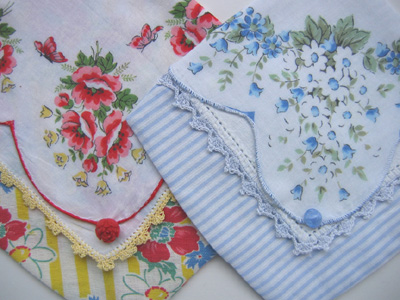
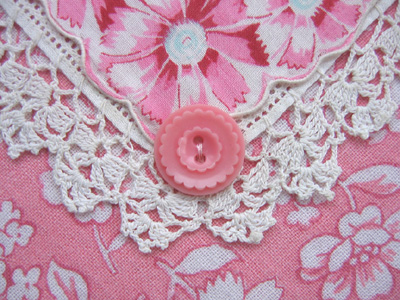
But it also got me thinking and, when I got home, I pulled down the box of hankies from the shelf. I had several plain ones and by that I mean there's no design except for their brightly-colored crocheted edges. Then I found a few printed ones that picked up those same colors. Layered over a coordinating fabric and secured with a button, they became sachets like these

hanky sachets

hanky sachet

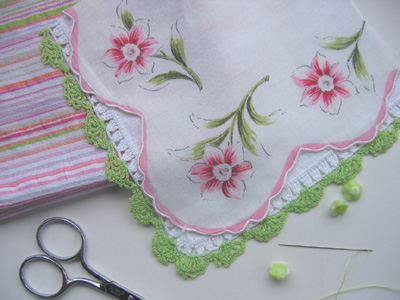
Or will become, I should say, since they haven't been filled with lavender yet. Here's another one in process—

hanky sachet

While eating lunch I also took the time to visit some of my favorite web sites and blogs (I think that's called multi-tasking). I see that I got a nice mention on Whip Up this past Saturday for my Stitch School posts. And a mention today at House Wren Studio by my new friend Charlotte. She recently started blogging and I think you'll enjoy reading about her crafting adventures. Be sure to visit when you get a chance.

A quick walk to the mailbox then it's back to the studio for me. When inspiration calls it's best to follow for as long as it lasts!

11.27.2006

Stitch School: Cross Stitch

Stitch School has moved to it's very own space on the web! You'll now find the Cross Stitch post here. Comments are now closed on this post; if you'd like to leave a comment please do so on the new one.

11.24.2006

Studio Friday: COMFORT

" I recently splurged on a new office chair, and it is making a huge difference in how my back and neck feel at the end of the day, since I spend a lot of time at my computer. Now that the weather has turned a little chilly in the mornings, I'm using my heated lap blanket on my chair to make my work spot even cozier. I wonder what other artists do to make their studios more comfy. Comfort foods? Family photos on the wall? A cozy spot for an afternoon nap?". ~ Lisa

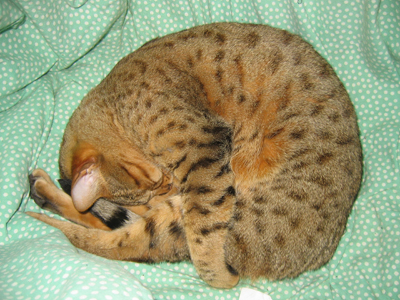
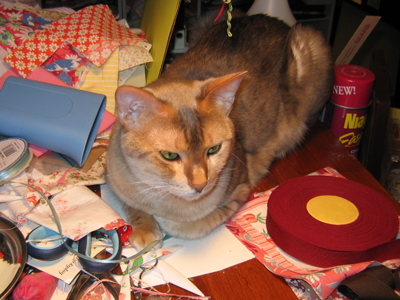
I don't do anything special for comfort in my studio. I'm constantly on my feet, moving from sewing machine to ironing board to cutting table and back again. I rarely sit down. So, I'm going to twist the concept a bit to include my cats. My cats like to follow me around during the day and, when I'm in my studio, they are, too. And cats are all about comfort.

Sienna

I found an antique baby crib at an estate sale for $15 a couple of years ago. I thought it would make a great storage/display piece for craft shows or a shop (if I ever have a shop, that is), piled high with pillows and baby things. For now it sits in the corner of my studio and has several old quilts piled inside. My cat Sienna spends a large part of her day curled up there. I sometimes drape another blanket over the top to make a cave for her and the warmth from the radiator right below it filters up underneath.

I wish sometimes that I was small enough to climb in there with her. It looks so cozy!

Amaya

My other cat Amaya likes to sleep under the lamp on my cutting table. This table is almost always a mess, with pieces of fabric and tools and all sorts if junk in the corner. It doesn't look very comfortable at all but that doesn't seem to bother her one bit.

I plan to spend most of today in my studio with my furry girls at my side. It's Black Friday and no way am I going anywhere near the mall or any store for that matter!

Read more about comfort here.

11.23.2006

Happy Thanksgiving

We almost always spend Thanksgiving day with our friends Dominic and Jenny. They have a beautiful three-story Victorian house in Scranton and five children between them, so it's an ever-changing group of people around the table each year. What doesn't change much is the menu, and I think that's true for most peoples holiday celebrations. Thanksgiving is about traditional foods and there's no messing with the family recipes. I always like to bring a little something when I'm invited to dinner, so Jenny asked me to bring a vegetable and a dessert.

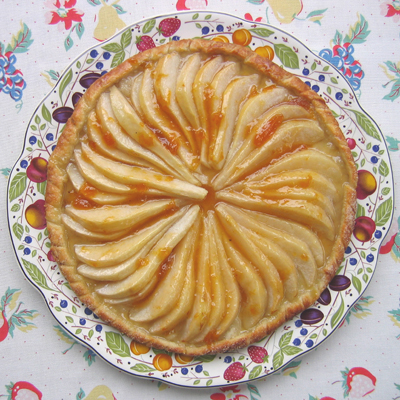
I'm going to try a green bean recipe with bacon and shallots this year. I hate that green bean casserole that everyone seems to love so much and this will be a lighter and fresher way to get our veggies. And I'm going to revisit a pear tart that I make occasionally. I can't remember where I got this recipe but it's super easy and yummy and different from the usual pumpkin and apple pies. We'll have those, too, of course.

pear galette

Pear Galette

1 cup all-purpose flour
1 tablespoon sugar
1/2 teaspoon salt
5 tablespoons cold unsalted butter, cut into small pieces, plus 2 tablespoons melted
1 egg
1 teaspoon milk
2 tablespoons apricot preserves, strained
2 Bosc pears (6 to 7 ounces each)
1 teaspoon pear liqueur or brandy

Preheat the oven to 425°F. In a medium bowl, toss together the flour, 1 teaspoon of the sugar and the salt. Cut in the cold butter until the mixture resembles fine crumbs.

In a small bowl, beat the egg with the milk. Sprinkle 2 tablespoons of the egg over the flour mixture and stir it in. Working quickly, gather the dough into a smooth mass, squeezing it gently until you can wipe the sides of the bowl clean. On a lightly floured surface, pat the dough into a flat even circle, about 5 inches in diameter. Wrap in waxed paper and refrigerate until cold but not hard, about 30 minutes. (The dough can be prepared a day or two ahead. Let it soften at room temperature for about 15 minutes, until malleable, before rolling out.)

On a lightly floured surface, roll out the dough into a 9 1/2-inch circle, turning it clockwise an inch or two each time you roll to maintain an even shape. Transfer the dough to a heavy baking sheet. Fold up the edge of the dough about 1⁄4 inch to form a neat, smooth rim. With the back of a knife, score decorative diagonal indentations around the rim. Brush the rim with a little of the beaten egg. Brush 1 tablespoon of the apricot preserves over the bottom of the tart shell. Refrigerate while you prepare the pears.

Peel, quarter, and core the pears. Slice each quarter lengthwise into 5 thin wedges. Arrange all but 6 of the pear slices on the pastry in a spoke pattern, overlapping them slightly. Trim the remaining slices and arrange them in the center of the tart.

Brush the pear slices with the melted butter and sprinkle with the remaining 2 teaspoons sugar. Bake the galette in the middle of the oven for 25 to 30 minutes, until the pastry is crisp and golden and the pears are tender. Slide the galette onto a rack to cool slightly.

Stir 1 teaspoon pear liqueur into the remaining 1 tablespoon apricot preserves and brush over the pear slices. Serve the galette at room temperature with cream that has been whipped with a small amount of sugar and pear liqueur. Serves 4-6.

Hope you all have a warm and safe holiday and don't stuff yourselves too much!

11.22.2006

Don't know much about history...

Q: I've heard some people believe that clothing (and linens, perhaps) carry with them a bit of all the hands they've passed through. What are your feelings on this? ~Jennifer

I hadn’t really thought about this before, at least consciously, but I suppose it’s true. I wrote down this quote from one of Rachel Ashwell’s books years ago and I think she captured beautifully the path that vintage linens travel.

"...Unlike some flea market goods that seem a little surprised to find themselves down on their luck, secondhand fine old linen remains serene. It was made to last forever; rather than being thrown away, its function changed. A heavy old linen sheet, with its handstitching and patiently-produced embroidery, might have rested for the first few years of its life in a hope chest or bottom drawer, waiting for the girl who made it to marry and have a home of her own. When the sheet became worn it would have been carefully mended and, later still, when too threadbare to be repaired, it might be cut down for another use—perhaps a sheet for a child's bed—and eventually would end its days as cleaning rags with years of history. Fine linen evokes elegence, luxury, civility, quality, durability, economy—it is the antithesis of everything we abhor about our disposable, use-it-once-and-throw-it-away society."

And I think this passing-down holds true for clothing as well. Before ready-made clothing was available women sewed all of the garments for their families. Adult clothing was cut down to fit the children and handed down from older to younger child as they were outgrown. And I wore plenty of hand-me-down dresses from my older cousin when I was a kid so I know this was true long after clothing could be purchased. Then, when things were too worn to be recycled yet again, they were cut up into patches to use in quilting.

The fact that vintage clothing has been hot on and off for years attests to this love of history, too. Have you ever tried on a vintage dress or hat and wondered who wore it and what their lives were like? Maybe people like vintage clothing because it's better constructed than modern, or because they want to dress differently and more creatively than their peers. But I think it's about history, too. And the fact that it was so well-made means it's still available now for us to purchase and wear.

Martha Stewart had a great idea a few years ago in one of her magazines. It was a memory quilt made from children’s clothing—just simple 4-inch blocks, all in pinks and super easy to put together. I think it may have included some of the buttons from the outfits, too. What a great keepsake and way of passing down memories. Here's a quote from the article:

"A baby's clothes acquire history so quickly. There is the blanket she came home in, the overalls she wore learning to crawl, the flannel pajamas she fell asleep in at night. Each outfit from her first year represents a milestone. For those items too precious to give away, or too stained to pass along, there is a solution more creative and less cluttering than a box in the attic, a baby memory quilt."

Vintage textiles, whether linens or clothing, have a story to tell. Even if you find only a few clues about their history, that's enough to imagine a story for them. If nothing else, you can start now and create your own treasures to be passed down to your children.

11.10.2006

Studio Friday: Studio Indulgences

"What can't you live without in your studio?"—Naomi

When I think of indulgence I think of things that are a little too expensive, things that when you buy them you almost feel a bit guilty for having done so. Like Godiva chocolates at $40 a pound—heavenly, but not something you'd buy for your everyday chocolate fix.

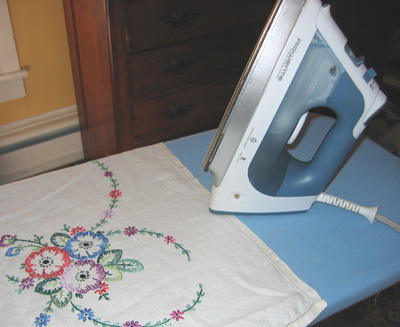
Sometimes you spend a lot on a piece of equipment—enough that you'd call it an indulgence—and it turns out to be a smart decision in the end. Take my Rowenta Professional iron. I think I paid around $100 for this, and that was with a coupon. That's a lot of money for an iron, but I've gone through at least three other brands in the past few years and it seemed better to buy one $100 iron than several $40 ones.

iron

I'm probably not your ordinary iron user—someone who irons (maybe) once a week and puts it away in the closet until next time. I use my iron every day and sometimes it's turned on for hours and hours. You could say I'm hard on irons. So, I really needed a good one.

I have a love/hate relationship with Rowenta. I had one of their first irons years ago and loved it. I have a funny story about when I bought it, too. I went to a local department store and when I was checking out, the saleswoman said to me "You know, you can bring this back if you get home and your husband says you spent too much on an iron." I thought that was kind of funny since I'm generally more thrifty than he is. And what a sexist comment!

That iron lasted for several years and I replaced it with another Rowenta that didn't. Then another that died after a month and died dramatically in a burst of flames and smoke. Oh, dear. That's when I started trying other brands. And that was worse. They didn't generate enough steam or get hot enough—no wonder people think ironing is a chore to be avoided at all costs. I finally splurged and bought the professional model.

So, was it really an indulgence? Perhaps not. But there's always chocolate. And craft books!

Indulge yourself by reading more here.

11.09.2006

Fabric shopping

I'm usually very excited when the new Hancocks of Paducah catalog arrives in my mailbox. If you have a fabric addiction, you know how easy it is to spend hours poring over the new choices. But I'm strangely disappointed in the latest edition. Why are all the fabrics so dark and dreary? Because it's winter? Bah!

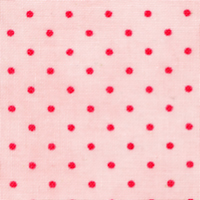
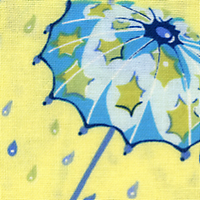
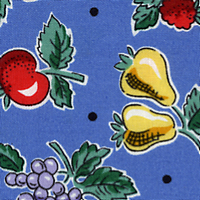
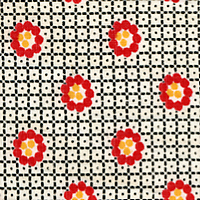
Yesterday I had a client meeting (for my graphic design business) north of Philadelphia and that put me very close to one of my favorite fabric and quilt shops, Country Quiltworks (515 Stump Road, Montgomeryville). But the problem for me with quilt shops is that there are too many options. I'm all excited at first, then quickly get overwhelmed until it all becomes a blur. Still lots of dark prints but I found a couple of fun things to add to my stash. Bet you can't tell I have a thing for polkadots :)

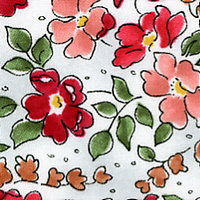
wild.rosedotsumbrellasfruit.dots
(Almost Poppy by Laura Heine for RJR Fabrics, QuiltPink by Moda, Kate's Umbrellas by Felicity Miller for Westminster Fibers, and Happy Times by Sharon Evans Yenter for In the Beginnings Fabrics.)

When I got home two hours later I had a package in my mailbox with some fabrics I'd won on Ebay a few days ago. When I don't find much that I like in the catalogs and shops, I turn back to Ebay for vintage fabrics. It's still the best place I know to find them and the patterns are usually much nicer than modern fabrics. I'm loving both of these.

red dot flowersyellow blue flowers

Just a little eye candy to brighten up another rainy day!

11.02.2006

Thrift Thursday: Aprons!

It's been a few weeks since I participated in Thrift Thursday. I do a lot of thrifting in the summer and not so much in the fall and winter. But it rained last Saturday and I couldn't work outside, so I hit some of the local places.

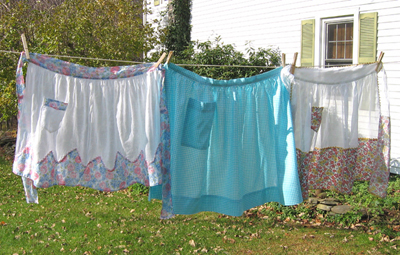
I found three aprons for $3 each. The sheer ones trimmed in fabric are vintage and the one with the yellow/red print is a feedsack print.At least it feels like feedsack and I think I recognize the print. The turquoise gingham apron is newer and I bought it because I want to try chicken-scratch which is crossstitch using the squares in the pattern as a guide. I was a bit disappointed to discover that it's a poly/cotton blend rather than all cotton.

vintage aprons

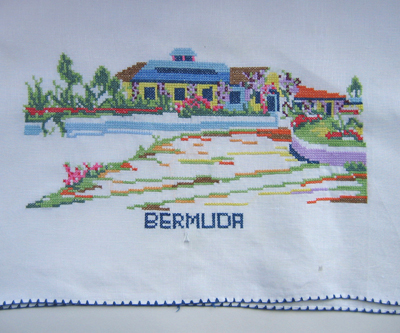
I also found this cute towel embroidered with the word Bermuda and a tropical-looking cottage. I have some tropical print fabric in my stash and thought I'd make a pillow from it. Unfortunately, when I washed it, what started as a very small hole turned into a much larger one. Using it will involve some creative button placement, I think.

vintage towel

I found a bunch of buttons that I didn't have time to photograph today—maybe they'll be my submission for next week :)

Please visit the Thrift Thursday Flickr group to see more lovely vintage finds.

10.31.2006

Boo!

halloween

I think Halloween is such a cool holiday and we had so much fun when we were kids. We'd carve pumpkins and have apple cider and powered sugar doughnuts (a yearly tradition) before going out to trick-or-treat. We lived in an apartment compex so this took hours. And we were required to stop home several times to unload our bags. This way, if it was a particularly busy night, my mother could raid our bags if she ran out of candy to distribute. We had candy to last until Christmas so it didn't really matter to us.

My favorite thing to dress as was a gypsy. I'd wear one of my mothers long cotton skirts with leggings underneath (it was always freezing on Halloween) and start piling things on top—gobs of necklaces and bracelets and dangly earrings, of course.

It was interesting to read about the origins of Halloween and how our modern customs evolved from the ancient celebration of Samhain, mostly imported here from Celtic countries like Ireland and Scotland.

Halloween or Samhaim (pronounced So-wen) falls on the pagan New Year and celebrates both endings and beginnings. The end of summer harvest and impending darkness after the light. The beginning of winter and the promise of new life in the spring. With this in mind, Samhaim was a religious time of fasting, reflection, meditation and prayer. It was also believed that the worlds of the living and the dead merged on this day. Many of our customs came about in order to maintain peace between these two worlds.

Costumes and masks were used for protection against spirits. Even after they converted to Christianity, people remained afraid of All Hallows Eve, the one day it was believed that spirits were allowed to freely walk the earth. In order to not be recognized by these spirits, people would leave their homes at night incognito in masks and misleading regalia.

In ancient Ireland the Druid priests of Muck Olla would go to farms begging for food and money for their houses of worship. If farmers didn't pay, their barns would be burned or their animals would disappear. These incidents were believed to have been caused by the god, "Muck" from which the word muck has come to mean trouble and chaos. Acts such as these evolved into the threat of 'tricks' (or pranks) if treats were not given.

In Ireland, it was said "Jack" was a mean drunkard who used to beat his wife. He played too many tricks on the devil to save his soul. When Jack died, he was too bad to get into Heaven and the devil was too annoyed with him to let him into Hell. The devil gave him a burning coal that he placed inside a partially-eaten turnip, called a bogie. From that day, Jack has wandered the earth with his turnip lantern looking for a place to rest his soul. Pumpkins eventually replaced the turnip and our tradition of the jack-o-lantern (Jack-of-the-Lantern) was born.

You can read more about this fascinating history here and here.

Whether you celebrate the ancient traditions of Samhain or the more modern Halloween, have a scary (but safe) holiday!

10.29.2006

So excited

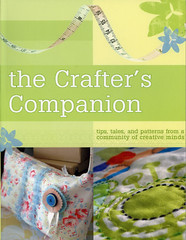
crafters_companion

My hot-off-the-press copy of The Crafter's Companion arrived yesterday! I had pre-ordered it as a birthday present to myself a few weeks ago and was eagerly awaiting it's appearance in my mailbox. And it's as wonderful as I knew it would be. Beautiful photos, fun projects, and lots of familiar names from the crafty blog community—Amy Karol (Angry Chicken), Heidi Kenney (My Paper Crane), Hillary Lang (Wee Wonderfuls) and Sarah Neuburger (The Small Object) to name just a few (there are 17 in all). I flipped though it quickly to look at the pictures - what can I say, I'm a visual person. But, I can't wait to sit down and read every word. I love to read about what inspires other artists, don't you?

Since everyone's been commenting to thank me for the links here's a list of the other 13 contributors:
Alison Brookbanks, Six and a Half Stitches
Anna Torborg, Twelve 22
Cassi Griffin, Bella Dia
Fiona Dalton, Hop Skip Jump
Juju Vail, Juju Loves Polkadots
Katey Nicosia, One Good Bumblebee
Lisa Congdon, Bird in the Hand
Lyn Roberts, Molly Chicken
Maitreya Dunham, Craftlog
Mariko Fujinaka, Super Eggplant
Myra Masuda, My Little Mochi
Tania Ho, Chocolate A Chuva
Tania Howells, Tania

10.27.2006

Studio Friday: Collections

This topic was hard for me. Not because I have no collections, but because I have too many. Which one to choose?

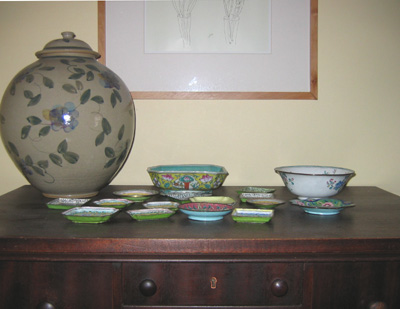
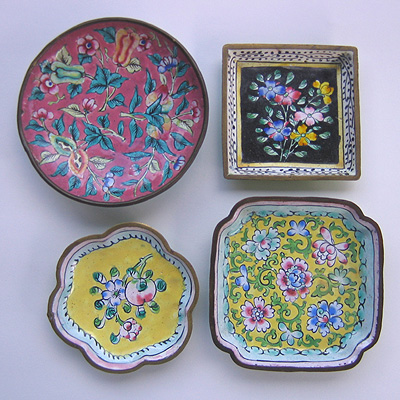
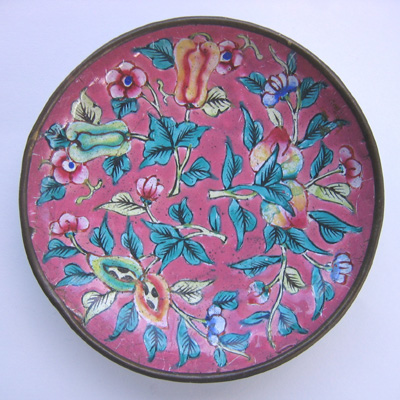
I hope this isn't cheating because I have these arranged on a dresser top just outside the door of my studio so technically not inside. But I get to look at them each time I pass through the hallway on my trips from my studio to the attic room where I store finished work and package orders. I've wanted to do a post about these little Chinese enamel dishes for a while, and will use this as the opportunity to do it.

enamel dish collection

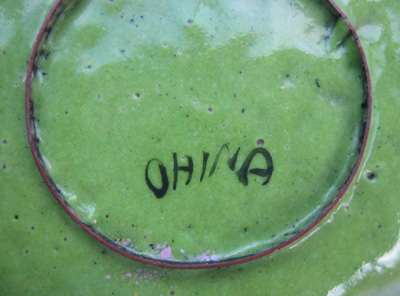
I don't even know what they're called. They're very small so don't hold much and they're not flat enough to be coasters. Maybe they're for sauces or condiments? I have no idea how old they are. I do know that they were imported from China and have a distinctive handwritten signature on the back. They're made of enamel over metal (probably tin) so are not nearly as fragile as they look.

stamp

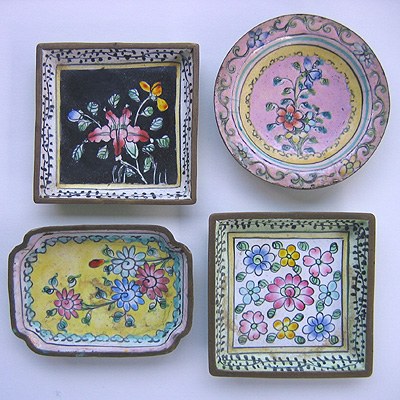
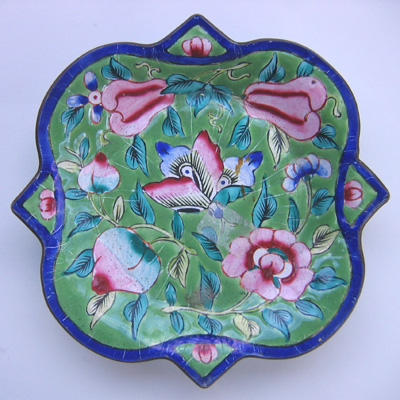
We started with a few square ones that my husband inherited when his parents downsized from their house to an apartment. Then we added a few round ones and lately some with more unusual shapes. This summer we found two larger, bowl-sized ones. The small ones cost just a couple of dollars so they're very affordable.

I love everything about them—their tiny size, the not-so-perfect hand-painted look, the jewel-like colors. Grouped together they're just so visually pleasing that I smile every time I walk past them. And isn't that what a collection should do?

enamel dishes

enamel dish

enamel dishes

enamel dish

See more wonderful collections here.

10.26.2006

Reading embroidery patterns

Someone commented on this week's embroidery post with a question about embroidery patterns—

"How do you tell which stitch to use when looking at a pattern? Do the patterns come with a guide?"

Great question. When you buy patterns in kit form—either modern or vintage—they'll probably have a guide that tells you which stitches and what colors to use. But with old patterns—like iron-on transfers or stamped-for-embroidery linens—you'll have to use a bit of intuition. At one time they did have instructions, and they probably were contained in a booklet that came along with the project. Here's what they looked like:
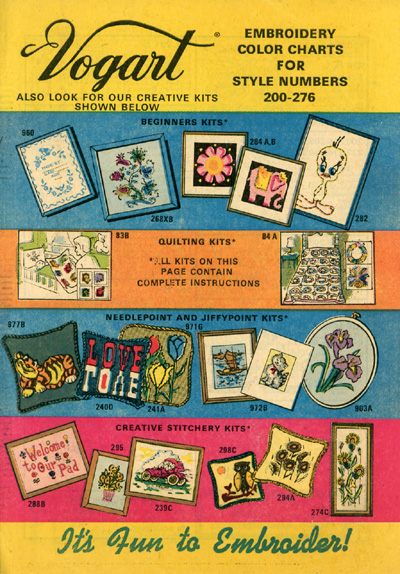
patternbook1

Inside are instructions for all the projects in that season's line, not just for the project you bought.
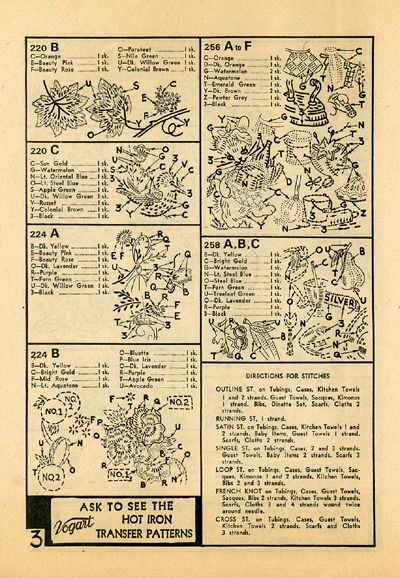
patternbook2

There are general directions for stitches within the book and color keys for each project.
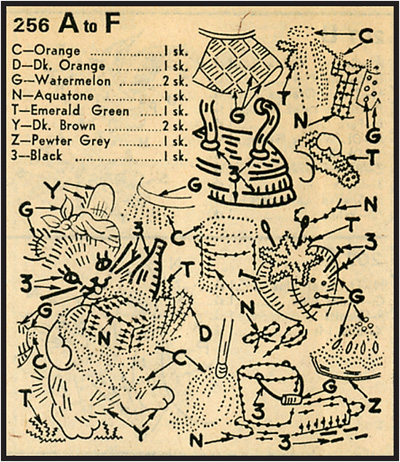
patternbook3

It's not surprising that, after all this time, these booklets got separated from the projects they came with. I buy lots of unfinished stamped embroidery projects on Ebay and elsewhere and they rarely come with any information. When I do come across these booklets I grab them because you never know what will match a project you already have. But, I like to chose my own colors anyway, and it's really pretty simple to figure out the stitches. Ninety-nine percent of projects use just five basic stitches: straight, outline/stem, French knots, lazy daisy, and satin (all of which we've covered already except for French knots).

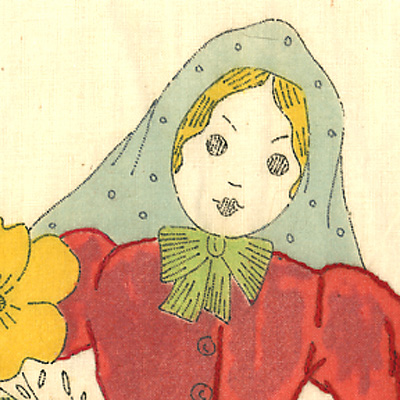
I'll show a couple of examples from some projects I haven't started yet. The first one is a vintage Vogart pillow top that the original owner started but never finished. She used outline stitch for the outline of the jacket, and that's what I'd suggest for any long unbroken lines, especially ones that curve. So, I'll also use this stitch for her shawl, the outline of her hair, around the outside edges of the bow, and the flowers.

Inside her hair you see a series of shorter straight lines—you can use straight stitch for these. And straight stitch will work for the straight lines inside the bow, too.

Tiny circles (like inside her shawl) calls for French knots. You start the stitch on one side of the circle and come down on the opposite side, trying to center it within the circle.

Notice that her eyes and lips have a series of closely-drawn straight lines and that's how patterns show satin stitch. You can go right over each line to get a loosely packed look or you can take another stitch in between to fill the shape in completely. The buttons on her jacket are probably supposed to be done in outline stitch as well, but I'm going to use real buttons instead.
patterns_1

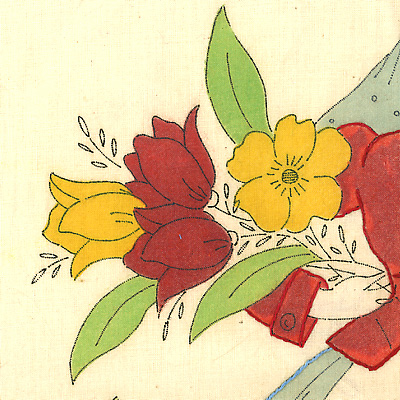
To the left of the figure in the first picture we see a bunch of flowers and these will be done mostly with outline stitch. Again, this is best for unbroken curved lines. But now we see something new—the small loop shape. This means detached chain or lazy daisy and that's what's used most often for small leaves. For flower petals, you'll often see these shapes arranged in a ring around a central tiny circle (French knot).
patterns_2

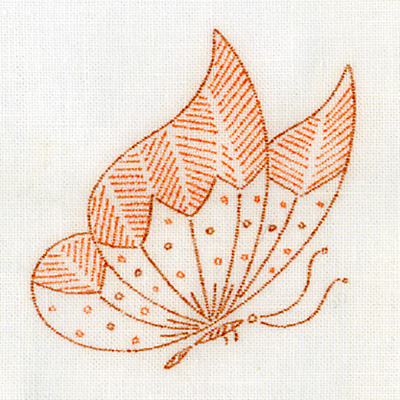
From a vintage runner, we have this butterfly. There are tiny circles (French knots), short straight lines on the wings (straight stitch), a body with closely packed lines (satin stitch), and some curvy feelers (outline stitch). Use a French knot at the end of each feeler.
patterns_3

And it's really that simple. Mastering the basic stitches will allow you to complete just about any project you encounter. Later, you might try substituting back stitch, chain stitch, or whipped running stitch for the outline stitch. It will look a little different but they're all good alternatives for long lines.

A lot of modern patterns use cross stitch, and that's easy to spot. I haven't covered this stitch yet, but basically it's two straight stitches that cross in the middle. The only thing to remember when doing it is to keep your stitches running in the same direction. So, do a row of stitches first in one direction, then come back over the row in the opposite direction to do the crossover stitches. This way all your crosses will look exactly the same.

Hope that answered your question. Keep 'em coming :)

10.22.2006

What's for dinner?

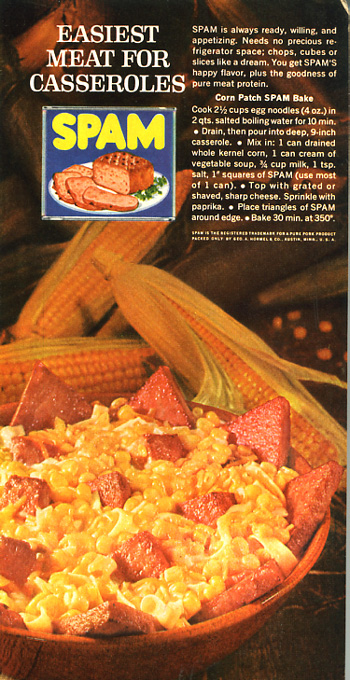
I've just finished reading Laura Shapiro's book Something from the Oven: Reinventing Dinner in 1950s America. It was really interesting to read about how hard manufacturers pushed convenience foods and what a tough sell it was for consumers. No matter how busy women were they didn't seem to be that impressed with convenience foods. Cake mixes were pretty much a failure until they changed them so you had to add your own eggs. I think you had to feel like you were doing something.

I grew up in the 60s and my mother started working full-time when I was around ten. So, we ate our fair share of recipes clipped from women's magazines from that time. We always had the more-time consuming, harder-to-prepare dishes on the weekends, but we ate lots of casseroles during the week. Things like spam with baked beans, tuna noodle casserole, hamburger pie with mashed potatoes and cheese on top, salmon loaf with cream of celery soup (I couldn't manage more than a few bites of this one), and a crazy tuna mixture baked with tater tots arranged in rings on top. I don't think we ever ate this casserole, but it's a good example of the standard fare at the time.

spam

We didn't have a lot of money and she only cooked one dinner—if you didn't eat it, you went hungry. So you learned to like (or at least tolerate) what was put in front of you. But the beauty of growing up and becoming an adult is that you don't have to eat what you don't like any more. So, no more salmon loaf or Spam for me—lima beans either.

I'm not a big convenience food person simply because I try to avoid all those unpronounceable chemicals and prefer the taste of real food. So, except for the occasional craving I get for tuna noodle casserole, I rarely make any of my mom's casserole recipes. I do make several of her more traditional recipes, though. Like this one for meatloaf. If you want that salmon loaf recipe ((((shudder))))), you'll have to find it yourself. :)
Marion's Meatloaf

2 eggs
1 cup milk
1/4 cup grated onion
1 teaspoon salt
1/8 teaspoon black pepper
1/2 teaspoon ground sage
2/3 cup dry bread crumbs
1.5 to 2 pounds ground beef or a combination of beef, pork, and veal
ketchup

Beat eggs with the milk. Add grated onion, salt, pepper, and sage. Add the breadcrumbs and soak for a few minutes until they absorb the liquid. Mix in the ground meat and pack into a loaf pan. Bake at 350 degrees for 1.5 to 2 hours. spreading ketchup over the top before the last half hour of cooking.

We always had this with mashed potatoes and green beans. I've made it with other accompaniments but they just don't feel right. And it makes wonderful sandwiches the next day.

10.21.2006

Ask me anything

I was having a discussion the other day with some online friends about interviews. How so many blogs do them but ask the same questions over and over. I'd like to do interviews, too, because I have some great friends who make wonderful products that you might like to hear about. But, I'd like to ask better questions, or tougher questions—something to shake things up a little. I still haven't come up with those questions and I'm open to suggestions. So, what would you like to read about if you could ask anything?

In our discussion one friend challenged me with a list of questions. I was asking in a more general way, but OK, I'll answer them because they're good subjects for discussion. This first one deserves it's own post so I'll save the others for another time.

Do you ever feel bad cutting up vintage linens?

Very simply, no. And here's why. I don't cut up anything that's perfect. In fact, I don't even buy things that are perfect unless I'm buying them for my own use. What you don't see in my finished work are all the flaws in the original materials—the yellow spots that don't wash out, the spattering of rust spots on the pillowcase back, the torn crochet trim, the badly-done embroidery that has to be taken out and redone or repaired, the holes and weak spots.

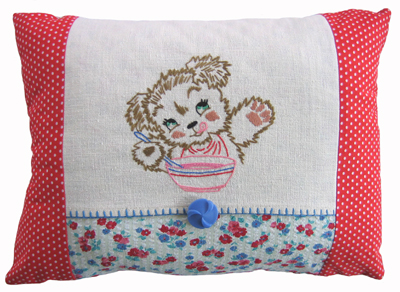
Here's an example. The hungry puppy pillow I posted a picture of recently was made from a stamped-for-embroidery towel. Just to the left of the puppy motif was a large brown stain that I wasn't sure would wash out. And with stamped embroidery you can't wash it until it's finished because you'll wash away the design. I took a leap of faith, did the embroidery, washed it, and the stain faded but was still there. So, I cut out the center and made it into a pillow. Had the stain come out I probably would have finished it (and sold it) as a finished towel.

This topic is actually very timely because I recently bought an embroidered baby pillowcase on Ebay. And the seller wrote to ask me how I was going to use it—was I going to cut it up or resell it or what? I wrote back to say that it all depended on the condition of the item. If it was perfect I might just copy the embroidery pattern and resell the pillowcase on my site. If it wasn't, then I'd use it in one of my creations. I received it a few days later, and what she neglected to say in the item description was that the hem was cut off. So, short of hemming it again (and there really wasn't enough fabric to do this) or adding a crochet edge (possible, but more trouble than it was worth), I really had no choice but to use it.

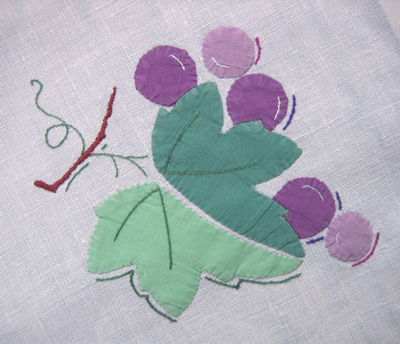
Do I sometimes buy things that are right on the line—not perfect, but not bad enough to cut up either? Sure. And they're stored in a box. I take them out once in a while, thinking I'll use them, but once I get the scissors in hand, I can't do it. Here are a couple of examples—

grapes

A section of a vintage tablecloth appliqued with fruits. There's a smallish yellow stain near the edge but the applique is so extraordinary that I can't cut it.

pull_toy

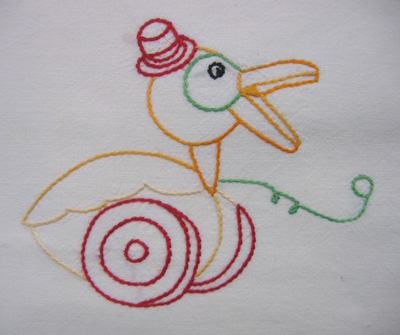
And this embroidery from a vintage baby coverlet that has a weak area/ragged hole along the edge. The embroidery is exquisitely-done and I can't cut this one either.

There are really two camps on this subject. Some people are horrified that anyone would cut up something that has both historical value, and that someone spent so much time creating—that it should be used as it was originally intended. The other camp feels that these pieces were created to be used, and that they should be. Let's face it, most people don't use doilies and table runners and lace tablecloths (much too fussy for our modern lives). So you could buy things and tuck them away for special occasions that may or may not come along. Or. you can recycle them into an item that you actually can use—a bag, a pillow, an article of clothing.

So, while I have great respect for the time and skill that went into these linens, and their historical value, I don't have a problem remaking them into something else. I think it's better to use a small good section of a piece than to throw the whole thing out because of a stain. However, I'm not going to cut up something gorgeous just because I need materials to work with. There are plenty of perfectly good slightly-damaged things out there—and they're much cheaper, too.

So, as I mentioned earlier, I'm looking for ideas for questions. But, if you have questions you'd like me to answer, send them along. It's sometimes difficult to come up with subjects to blog about, so really, I don't mind. If it's too personal, I'll let you know :)

10.20.2006

Studio Friday: Autumn Inspiration

"Autumn inspiration - According to my calendar, today (Sept 22) is the "Autumnal Equinox," and it's my favorite season, so show me what you love about the fall - the colors?... the leaves?...etc."
~ Kerri


In pagan religions the year is seen as a wheel that symbolizes the eternal cycle of life. Autumn is the time for harvesting what we've sown, for reflecting on our place in that cycle, and for honoring those who have gone on before us. All around us things are dying, transitioning into winter, and preparing to be reborn next spring.

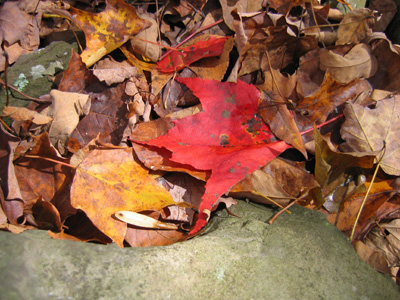
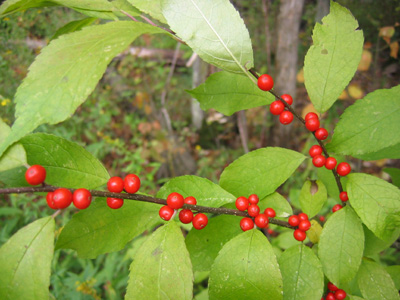
I love that, amongst the decay, there are these last gasps of color—the "look-at-me" yellow-golds, fiery oranges, and shocking reds. Especially those reds.

red leaf

red berries

So, autumn, for me, is largely about color. Lucky for me that I live in a part of the country known for it's spectacular examples. I also love the crisp air as it gets colder outside and the smell of wood smoke and apples. I love the process of preparing for winter and how cozy my house in the country will be when the snow starts to fly. And I will take time to reflect on the past year (business and otherwise) and make plans for the new year to come. It never hurts to get an early start. I think I see some red pillows coming up :)

More autumn inspiration here.

10.19.2006

Well, it's over

Season 3 of Project Runway, that is. Congratulations to Jeffrey Sebelia, who I'll admit is a creative and innovative designer but whose clothing is just not to my taste. And who already has a clothing line and company! So, yes, I'm in the "Uli was robbed camp". Oh, well, nobody cares what I think, fashionista that I am- LOL! All of the top four designers will do well, including Uli, and it will be interesting to see where they all are a year from now.

I've been finishing up an order of sachets for a gallery in Virginia, and a batch of tissue cozies for a trade with another artist, so I've been avoiding the computer the past few days. I am working on a few new posts, so I'll be back tomorrow. And what's a post without pictures, so here is one of the new sachets. I'm using brighter colors underneath the eyelet on these, so you see little hints of color peeking out. I still have shops that like the all-white ones, but I think I like these better.

lavender sachet

10.17.2006

Pillow Talk

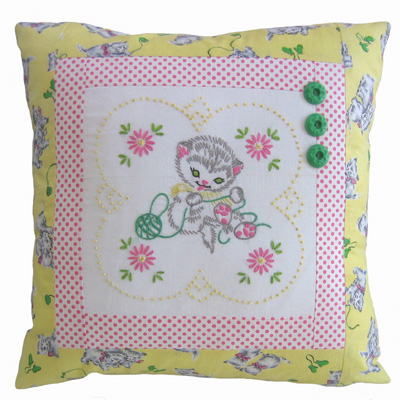
The new pillows I mentioned last week have been added to the site. Knittin' Kitten features one of those 1950s stamped-for-embroidery quilt blocks I got on Ebay this summer. I embroidered it in colors to match the yellow fabric, which I recycled from a vintage apron. I love the little gray kitties with their bright green balls of yarn and mittens on strings. And the cool flower vintage buttons match the green exactly.

Knittin' Kitten

And Hungry Puppy features a stamped-for-embroidery towel that I bought this summer, then paired with some vintage fabrics and a vintage blue swirly button. I can't decide if this is a puppy or a bear cub—I've changed my mind too many times. What do you guys think? Maybe it's really Baby Bear from Goldilocks? I can always change the name.

Hungry Puppy

And, this is the first time I've done this, but I've just marked down a bunch of pillows to wholesale prices (that's 50% off!) I'm running out of storage space and need to move out some of the older designs. So get over there and do some early holiday shopping. Or get that pillow you've had your eye on for a while.

10.14.2006

Sewing is everywhere

A nice article about the new popularity of sewing originally published in the Baltimore Sun last week—

Younger hands taking up needle and thread
by John Tanasychuk

Until four years ago, Kerry Szymanski had never spent a minute at a sewing machine.

But in 2002 she decided the best way to meet people was to take a class. "I started taking sewing lessons," said Szymanski, of Fort Lauderdale, Fla., "and fell in love with it."

So much so that she now owns Sassy BB, where her MBA and marketing background meet her newfound sewing skills. Along with sewing the purses that her customers design, Szymanski, 37, gives lessons to a generation of women - and men - discovering the joys of bobbins and seam allowances.

Blame Project Runway, the hit Bravo reality show that airs at 10 p.m. Wednesdays. It has done for sewing what Sex and the City did for ... well ... single women living in Manhattan. Project Runway turns cutting, draping and transforming fabric behind a Consew industrial sewing machine into high drama.

Other signs that sewing is everywhere:

• In Style magazine recently showed readers how to transform last season's styles into this season's. (Prairie skirt to bubble skirt, anyone?) Real Simple magazine featured a four-page spread on sewing basics.

• New how-to books make sewing sound hip. Consider Sew Subversive (Taunton, $14.95), which teaches you how to turn a T-shirt into a tote bag, or In Stitches (Chronicle, $24.95), which includes instructions for a fabric tunnel for your cat.

• Teen and tween sewers are led by Emily Osment, the 14-year-old actress who plays Lilly on Disney Channel's Hannah Montana, who specializes in halter tops.

• Those ubiquitous home-decorating shows might not show the Singers, but the new pillows didn't get done without a sewing machine. Call it aspirational sewing.

Todays' sewers are motivated more by fashion and individuality, and less by practicality and economy.

The national Home Sewing Association reports today's 35 million sewing enthusiasts are "embellishing" and "adapting."

"It's not like we're making clothes from scratch," said Allison Whitlock, the thirtysomething host of Uncommon Threads, a daily show on DIY Network. "What girls and guys are doing is going to vintage stores and buying that shirt where the collar is a little too big or the fit isn't quite right. And then we're reconstructing them and adding our own flair to them, updating the style."

At Calico Corners home fabric store in Boca Raton, Fla., the average customer age gets younger every year.

"I think it's because of the exposure and interest generated by HGTV and the Internet," said Claudette Bublak, a Calico Corners employee for 33 years.

10.13.2006

Studio Friday: Fear

I wouldn’t say that I’m filled with fear. I’ve survived cancer and there’s nothing quite as scary (and humbling) as that. Everyday fears seem rather small in comparison.

But I do have doubts and worries—we all do. I had to laugh about the timing of this topic, because I posted last week on my more personal Live Journal blog about waking up one morning freaking out about retirement. You see, I used to have a high-paying job with all the benefits that came along with it. All the stress, too. Mostly I'm fine with my decision to leave, but every once in a while I get a bit panicked about the future. When you work for yourself, there are practical concerns having to do with health insurance and taxes and retirement accounts that you don’t really think about with a regular corporate job.

And, as Casey said, you also don’t have the parameters that come with a job. There’s no one giving you performance reviews to keep you on track. Sometimes the only feedback you get are comments from customers and blog readers. So, you worry about whether people like your work, and like it enough to buy it.

When I first started my blog I worried that nobody was reading it. It felt like I spent so much time on it and it just disappeared into a black hole somewhere. So, a big thank you to my readers who comment and let me know you're really out there :)

What else? I worry that I won’t get orders, and then I worry that I’ll get too many and not be able to handle the extra work. I worry about running out of ideas or getting stale. And I worry that I won’t have enough time to implement all the ideas I do have.

These kinds of worries are OK, I think, because they help us to stay focused on what we're doing. We have some degree of control over them. It's the worries that are out of our control that are harder. I worry about the direction our country seems to be headed in and the willingness of people to give up the freedoms our ancestors fought so hard to secure. I don't know what to do about that. I think I'd be even more afraid if I had children.

Oh, and I'm really afraid of spiders, too.

Read more about fear here.

10.08.2006

There's a little farm girl in all of us

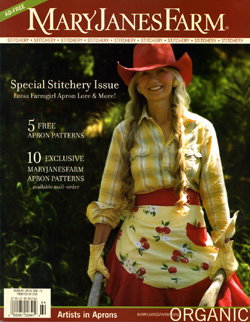
I've been seeing a new magazine on the newstand the past couple of months but didn't pick one up until yesterday. Really, could you resist a cover line that says "Special Stitchery Issue"? I couldn't.

mjf_mag

The magazine is called Mary Janes Farm and is part catalog for the company's organic food and related products and part magazine. And it has no advertising (except for their own products), which is pretty unusual in the magazine world.

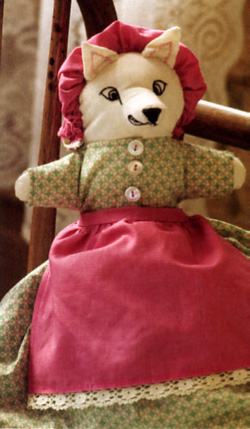
This issue has lots of articles about stitching—mostly about aprons. And there are instructions and patterns for five aprons—a hankie pocket apron, a hankie apron, one with faux smocking, and a make-do apron recycled from a shirt. The fifth is a super cute Little Red Riding Hood 3-in-1 topsy-turvy doll. If you flip back Little Red Riding Hood's skirt, you'll find Grandma underneath and when you flip up Grandmas' bonnet you'll find the wolf hiding inside wearing her apron. How cool is that?

mjf_wolf

They have ten more apron patterns for sale, both through an order form at the back of the magazine and on their website product page. They also sell a few embroidery kits, one for dishtowels with veggies that looks pretty cool.

I haven't had the chance yet to really sit down with this and read the articles but wanted to mention the magazine so you can go out and find one if you're interested. I have a feeling this one will be flying off the shelves!

Photos copyright 2006 by MaryJanesFarm